
Running a Muscatine County Sex Offender Check
The Iowa Sex Offender Registry is the main public search for Muscatine County. The Iowa Department of Public Safety and Division of Criminal Investigation manage the statewide system under chapter 692A. Searchers can start with a known name, or narrow a place search by Muscatine County, city, ZIP code, address, and the options shown by the live interface. The public database is free. It is built for safety and notice, not punishment or private retaliation.
Muscatine County offers a second route through the Sheriff's Office. Iowa Code section 692A.121(5) allows a person to ask the sheriff about a specific registrant by phone, in writing, or in person. Give the name and at least one more identifier, such as a date of birth, address, telephone number, or internet identifier. The sheriff may not charge for that request and must provide access to a county registrant list on request. This local channel can cover some information that is not part of the ordinary internet profile.
Muscatine County Registry Appointments
The Muscatine County Sheriff's Civil Division has assisted with local sex offender registration since 2013, while the sheriff's investigations function oversees compliance and investigates violations. Registration is by appointment on weekdays from 8:00 a.m. to 4:00 p.m. Call 563-262-4190 extension 3101 before arriving. The local office is at 3600 Park Avenue West, Muscatine, Iowa 52761. The civil line is 563-263-4521, and the main sheriff number is 563-264-0188.
The county charges a $25 annual registration fee, payable in cash. A person moving into Muscatine County must complete the required initial registration, and changes governed by chapter 692A generally must be reported in person within five business days. These obligations belong to the registrant. Members of the public should use the registry search or the lawful sheriff request route, not attempt to enforce registration duties themselves.
The official Civil Division page shows the local unit that supports registration work.
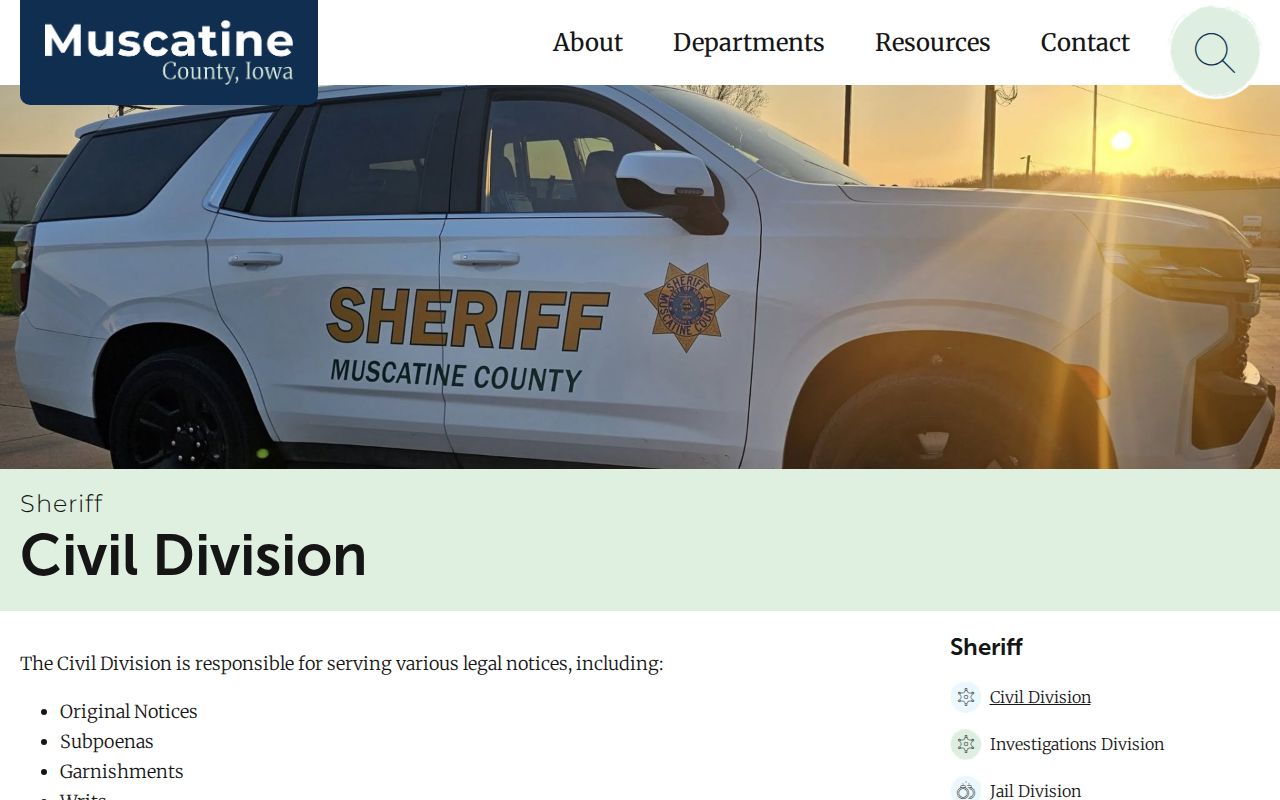
That county page connects the statewide registry rules to the Muscatine County office that accepts appointments and public inquiries.
Searching the Iowa Sex Offender Registry
Begin with the smallest set of facts that can distinguish the right person or place. A name search is useful for a known individual. A county, city, ZIP, or address search is better for community awareness. Results can change as people move or report updates, so note the date of the check. The registry says it updates daily and may refresh as often as every 30 minutes on business days, yet it also warns that the public view is not the entire registry.
- Open the official Iowa registry and read the conditions of use before searching.
- Enter a name, or choose Muscatine County and add a city, ZIP code, address, or available radius filter.
- Compare the result list carefully. Use aliases, photographs, and lawful physical details to avoid a false match.
- Open the profile and review the qualifying offense, address information, Iowa classification, status, and any limits shown.
| Field | Control | Required | How to Use It |
|---|---|---|---|
| Name | Text | Search-dependent | Use for a known person; check aliases on the profile. |
| City | Text or dropdown | No | Try Muscatine, West Liberty, or Wilton. |
| County | Dropdown | No | Select Muscatine County for a county-wide result set. |
| ZIP code | Text | No | Narrows a geographic search. |
| Address or location | Text or map | No | Use for the geographic route when offered. |
| Radius | Dropdown | No | Choose only a distance shown in the current interface. |
| Map or list | View control | No | Switches how geographic results are presented. |
The official Muscatine County registry page links local instructions to the statewide search.
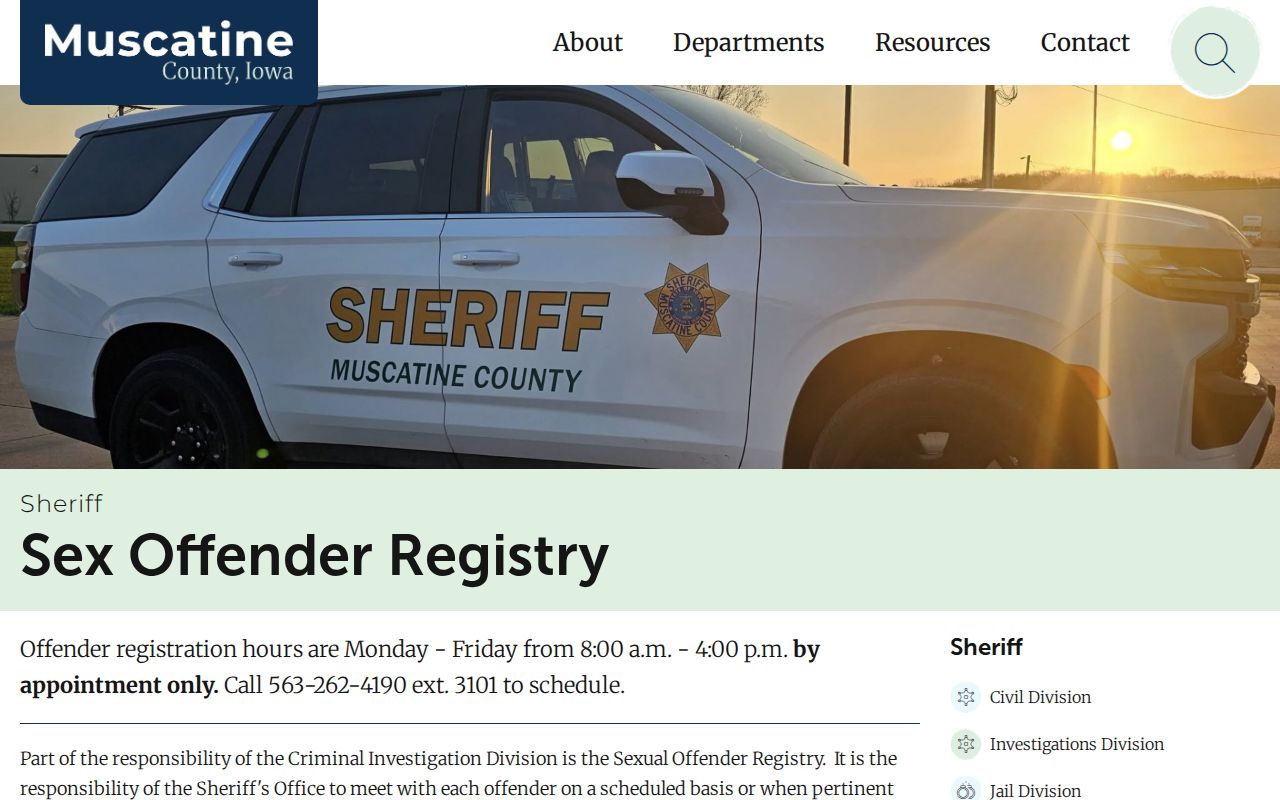
The current form should control each search because filter choices and public notices can change.
Muscatine County Registry Map Limits
A map pin is a navigation aid, not proof that someone is standing at that spot. Iowa warns that map positions are not guaranteed, and Muscatine County's pink-zone map is only a guide. The Sheriff's Office must verify whether a proposed address meets a restriction. Check the profile text, the underlying address data, and the date of the search before drawing a conclusion from the map.
The 2,000-foot school and child-care residence limit in Iowa Code section 692A.114 does not apply to every person on the registry. It applies to the statutory category of an aggravated offense against a minor. Section 692A.113 also sets defined 300-foot exclusion and loitering zones for covered offenses against minors, with stated exceptions. A generic assumption based only on a tier label can therefore be wrong.
What a Registry Profile Shows
A public Muscatine County registry profile can identify the person and explain why the listing exists. Iowa Code section 692A.121 controls which categories appear online. A field may be absent because it does not apply, because the current interface presents it elsewhere, or because the law reserves it for a specific-offender request to the sheriff. Do not treat a blank field as proof that no data exists.
| Name and Aliases | Legal name, nicknames, and aliases disclosed by the public system. |
|---|---|
| Photo and Description | Photograph and physical traits, including scars, marks, or tattoos when displayed. |
| Residence | Address or location information at the level Iowa law permits. |
| Qualifying Offense | Statutory citation, offense text, jurisdiction, and conviction information. |
| Classification | Iowa Tier I, II, or III classification and related registration context. |
| Registration Status | Compliance or other current status information shown by the registry. |
| Restricted Data | Victim identity, Social Security number, DNA, fingerprints, passport and immigration documents, driver identification, and nonconviction arrests do not belong in the public internet profile. |
The Iowa juvenile-record law illustrates another limit on public criminal information.
Confidentiality rules help explain why a public registry or court search never represents every justice-system record.
Muscatine County Registry Versus NSOPW
Use the Iowa registry as the authoritative local source. Use the National Sex Offender Public Website when a person may have moved across state lines or when a place-based search crosses Iowa's border. NSOPW combines public registry data from participating jurisdictions, but it does not replace the Iowa agency that maintains a Muscatine County entry.
A good cross-state check starts in Iowa, repeats the name in NSOPW, and then opens the official state source returned for any likely match. Spellings, aliases, release timing, and public field rules can differ among states. The source jurisdiction should resolve a conflict.
The Department of Justice national search page provides the cross-state layer.
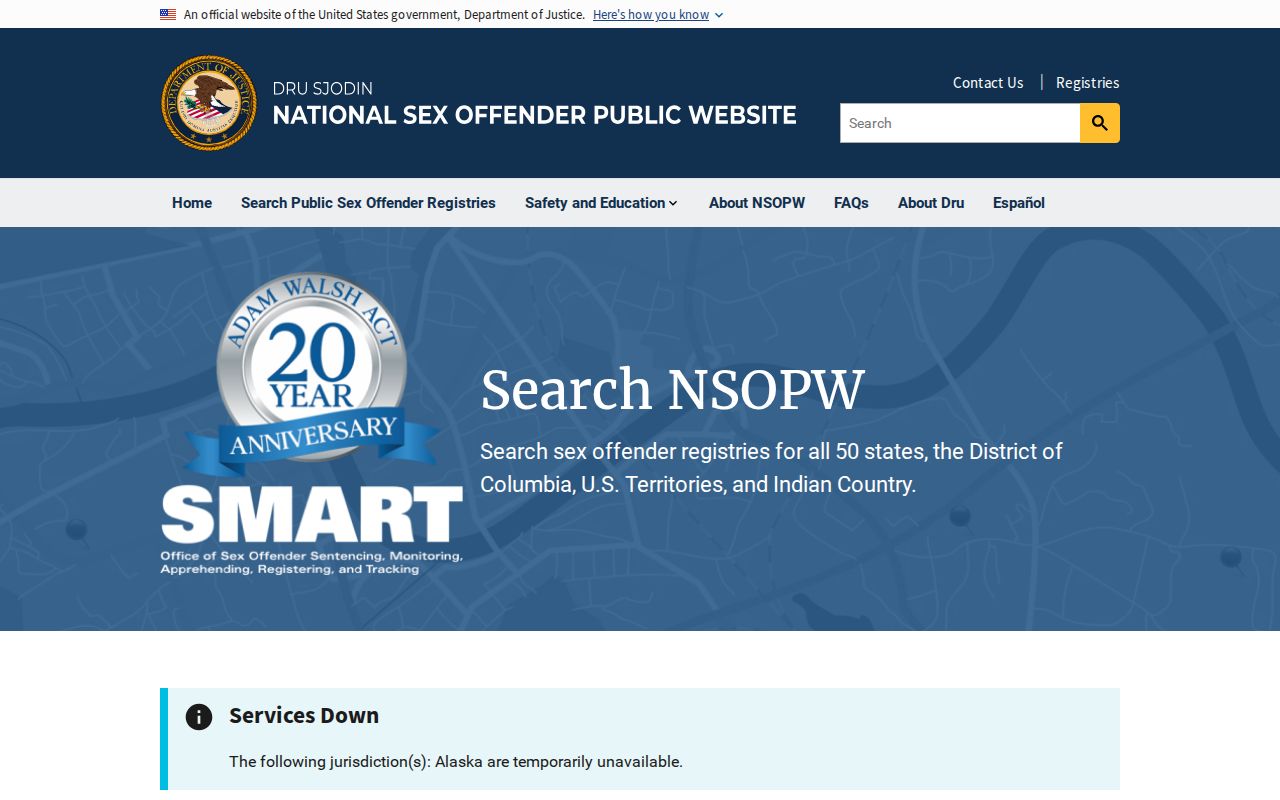
This national view is most useful as a bridge back to each state or territory's official record.
Registration Requirements and Levels in Iowa
Iowa uses chapter 692A classifications. Tier affects how often a registrant verifies in person, but it does not by itself settle how long registration lasts. Section 692A.106 sets a general ten-year baseline. Special sentences, later qualifying offenses, revocation, tolling, extensions, and sexually violent predator status can change that period. Address, employment, and student changes generally must be reported in person within five business days.
| Iowa Classification | In-Person Verification | Duration Context |
|---|---|---|
| Tier I | Annually | Generally 10 years, subject to statutory overrides. |
| Tier II | Every six months | Generally 10 years; a repeat Tier I classification may elevate the tier. |
| Tier III | Every three months | Generally 10 years unless an override applies; sexually violent predators register for life. |
The official text of Iowa Code chapter 692A controls classification and duration.
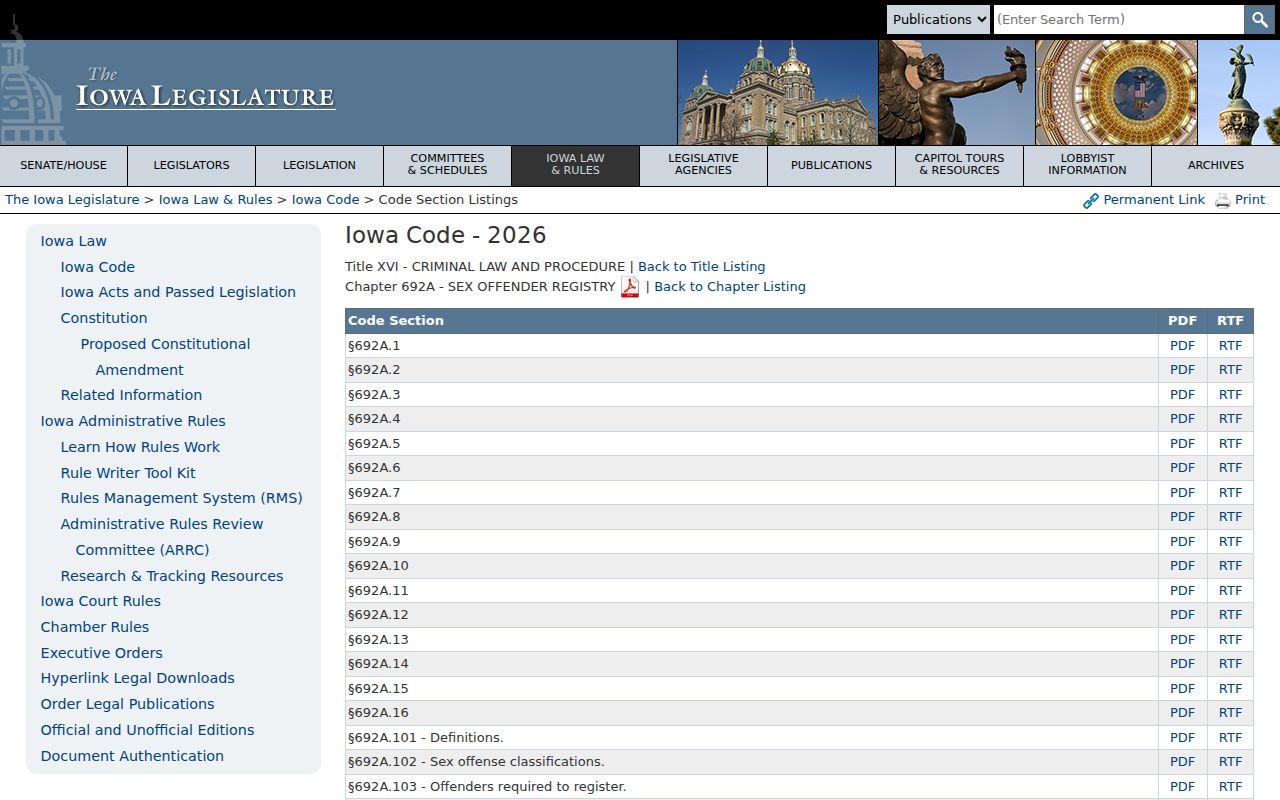
The statute should be checked when a profile's tier and registration term seem inconsistent.
Muscatine County Registry Watches
Iowa lets users create watches through a free Iowa Okta account. A watch may track an address and radius, a city, Muscatine County, a ZIP code, a specific registrant, or a group. Email notices can report moves into, out of, or within the watched area. Watches help residents keep a place search current without repeating it each day.
An alert is still a prompt to open the live profile. It should not be shared as proof of misconduct. Moves, data corrections, and reporting events can change the display. For a specific Muscatine County registrant, the no-fee sheriff request remains available when a public profile does not answer the narrow question.
Reporting Muscatine County Registry Noncompliance
Suspected noncompliance should go to law enforcement. Use 911 only for an emergency. For a nonemergency Muscatine County concern, contact the Sheriff's Office and provide a concise description of the conduct, location, time, and the registry profile that prompted the concern. Do not confront the listed person, enter private property, or post an accusation as fact.
The registry agreement warns against automated access outside official feeds and against threats, vandalism, assault, stalking, or harassment. Law enforcement decides whether a reported fact shows a chapter 692A violation. A registry listing alone does not prove a new offense or a breach of reporting duties.
Lawful Use and Community Notification
Registry information supports community awareness and practical safety planning. It can help a family review a new neighborhood, set an address watch, confirm a known person's public listing, or route a possible violation to the correct office. Use the record as published, check the retrieval date, and verify uncertain details with the Iowa registry or Muscatine County sheriff.
The Iowa Open Records Law shows that public access still operates alongside confidential categories.
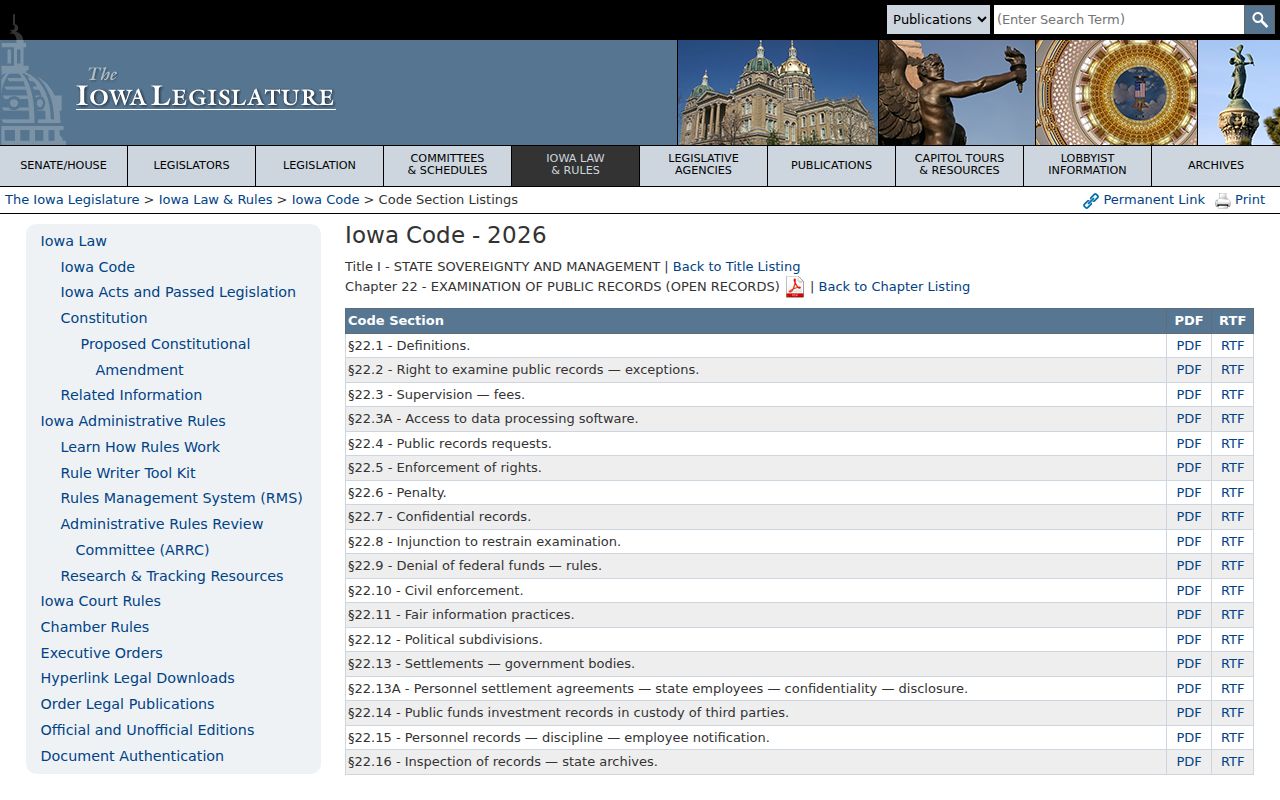
Public access does not erase statutory limits on disclosure or lawful use.
Registry Misuse Is a Crime: Iowa Code chapter 692A prohibits using registry information to threaten, intimidate, or harass a registrant or another person. Misuse can lead to prosecution.